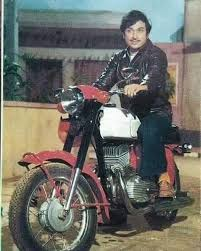
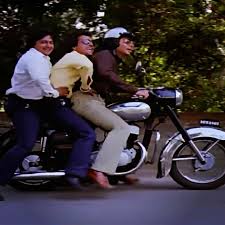
When Rajkumar needed to profess his love to Lakshmi and chase a train on the road, the bike he turned to a bright red and white Yezdi 250 Type B. He jumps over traffic (the start of Bangalore as a city) to reunite with Lakshmi in one of the most thrilling climaxes in Kannada cinema during the golden era of peak Dr Rajkumar.
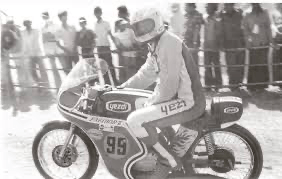
While the brand Jawa might be the son of Czech descent, as a Kannadiga, my ears fall deaf on the origin as it feels close to my high school in Mysore. My history teacher told us stories of employees walking with their heads high to start work as the bells of the Yadavagiri factory, applying the gold lines across the Yezdi brand on the 16L fuel tank of the Roadking. The brand was synonymous with reliability, simplicity, and Rallying.
While the company closed in 1996 and apartments were built on the ruins of the old factory, the company has stood the test of time. These machines’ enduring value is evident in the remarkable fact that vintage Yezdi Roadking models command prices comparable to new Royal Enfield motorcycles, demonstrating their lasting appeal and the strong collector market for these iconic machines.
India in the 20th century
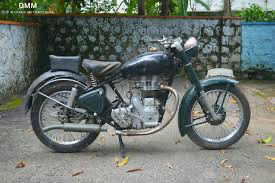
In the late 20th century, the Indian motorcycle market was dominated by three distinct manufacturers, each catering to specific consumer segments. Royal Enfield was a premium brand because it was British. The Bullet was a symbol of masculinity as it was a big bike used by the military before and after independence (In 1949, the Indian army ordered 750 Bullets for patrol use).
At the other end of the spectrum, Rajdoot positioned itself as the accessible choice with its Rajdoot 175 model. The bike was based on a Polish SHL M11, with a 175cc air-cooled engine with three gears. It was slow and unreliable, but it was cheap. In a growing economy like India, it is used by milk vendors and other daily workers.
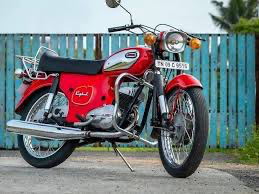
Occupying the middle market segment, Jawa-Yezdi offered motorcycles that balanced style, reliability and performance at a reasonable price. The two-stroke engine was light, powerful and easy to work on. The bike has a semi-automatic clutch, a tremendous innovation at the time.

The family’s relationship with a Jawa
Dawn of Being: The Shining Forge
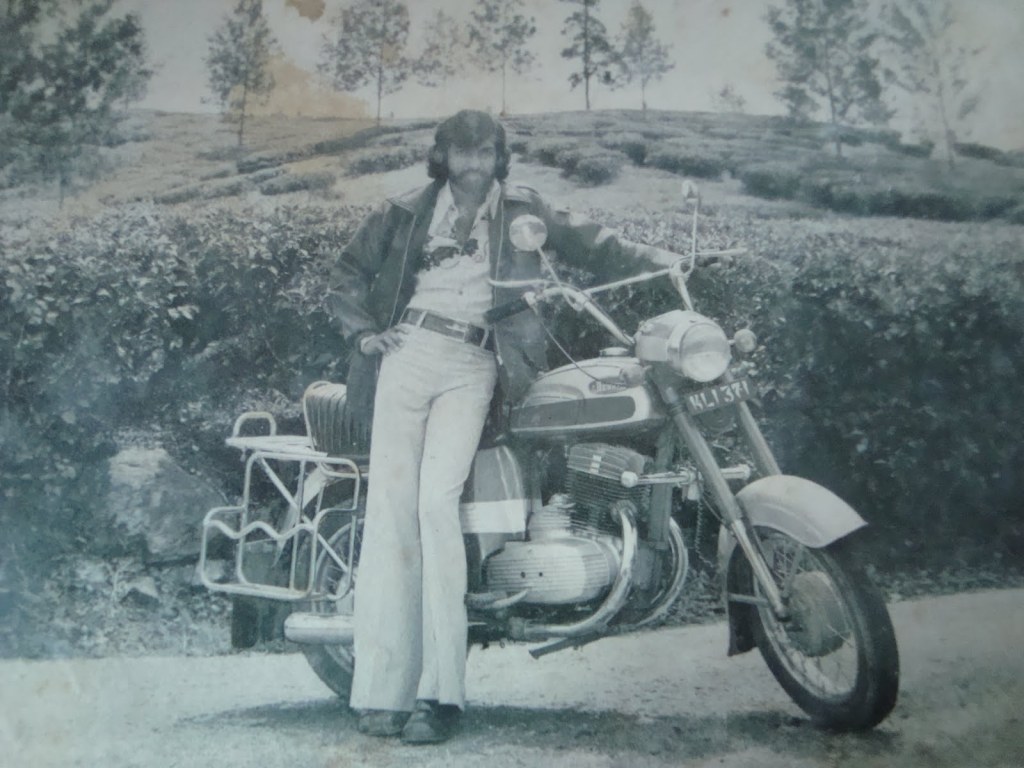
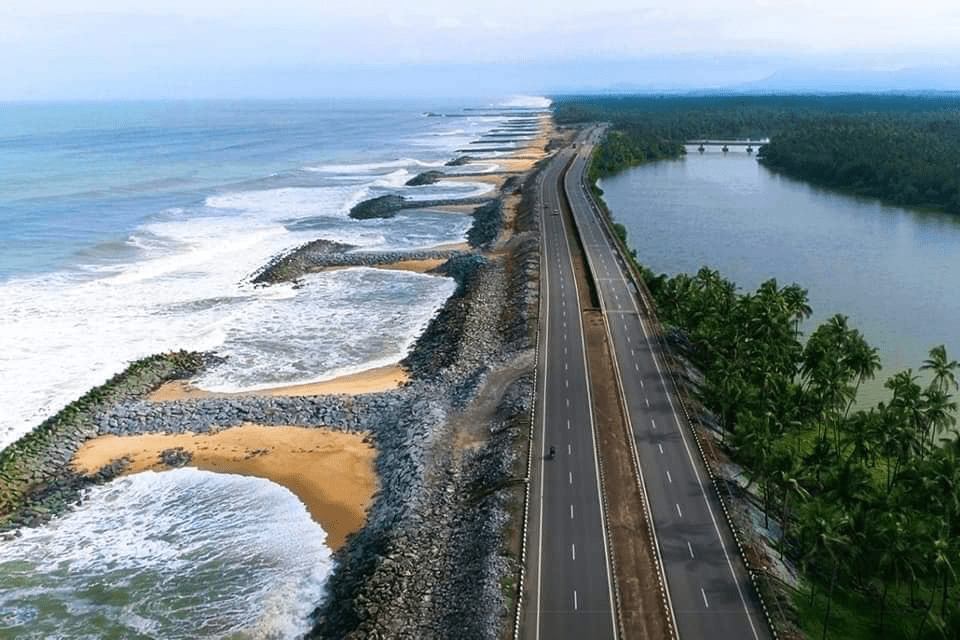
A bachelor named Narayanan bought a second-hand 1964 Jawa 250 in Goa and rode it every two weeks to his ancestral home in Suratkhal. He would ride along the beach, with air running through his hair, riding over potholes, to come home to the warm embrace of his ancestral home and the comforting taste of hot idlis with ghee. Being an engineering graduate, the bike was just a mode of transportation to him. A bunch of gears and metal helped him to get from point A to point B.
Midday of existence: The weathered Patina
For the yin called Narayanan, there was yang in the form of his son, Karthik. He adored the bike; he worked for 2 months during his holidays to fix the registration and bribe RTO officials in restrooms in Yelahanka Bangalore just to be able to ride to college when he got the chance. The bike was not only a hunk of metal but a symbol of freedom and nonchalance. The handlebar represented the wide stance he’d pose while wearing a pair of sunglasses; the tank represented the 300 rupees he spent on gas, and the back seat represented the opportunity to seat a girl like in the movies. The bike made him look like Elvis Presley riding down a long and winding road.
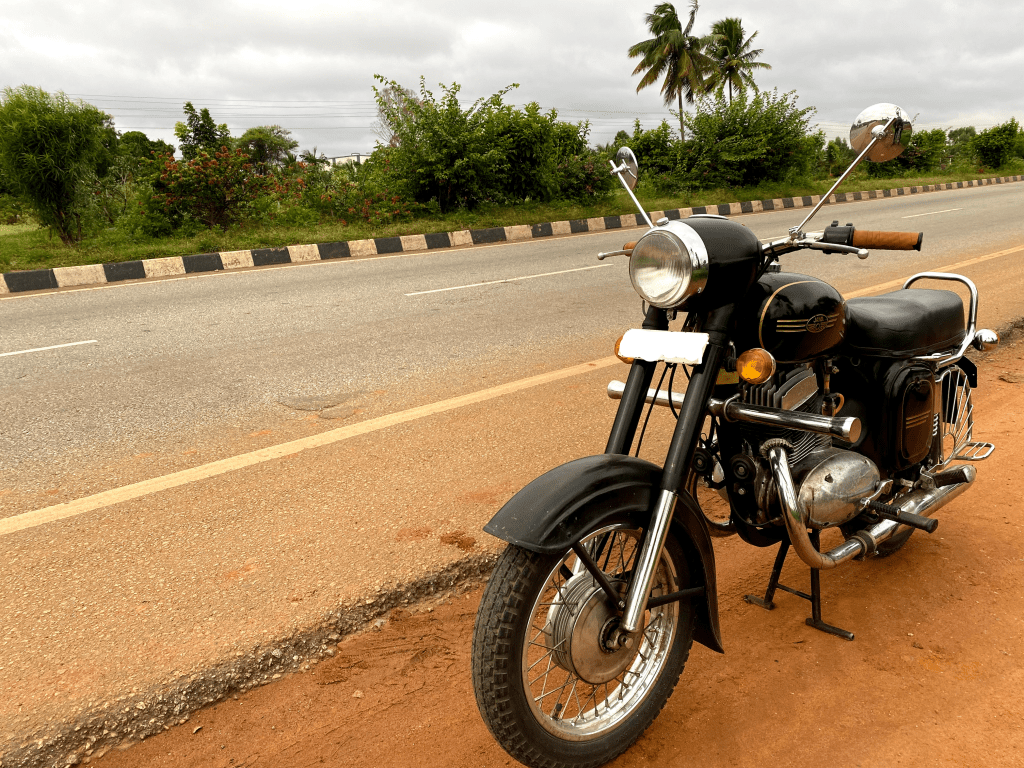
He used the bike throughout his engineering, riding it via Mekhri Circle, Winson Manor Bridge, around Race Course Road, and through Chickpet to get to the gates of Bangalore Institute of Technology on KR Road in Basavangudi. He was over the moon as the telescopic and hydraulic shock absorbers compressed and retracted over the potholes of Bangalore roads; the engine roared away with the iconic two-stroke beat. Little did he see the newspaper article about the Yezdi factory shutting down 150 km away.
Twilight of Reflection: The Polished Resilence
As Dr Manmohan Singh stood in the Indian Parliament to reveal the 1991 budget of a new open India, Yezdi engineers didn’t expect their golden goose’s eggs to be useless in a few years. The opening of the economy left the door open to nibble, reliable and economic Japanese Suzukis, Hondas, Kawasaki and Yamaha. Yezdi engineers would rely on export vehicles from Czechoslovakia for their so-called “RnD”, and the flaw of not having a 4-stroke engine in their pipeline was the final nail in the coffin.
Once India banned two-stroke engines in the name of emission control in 2003, the Ideal Jawa Yezdi factory that closed in 1996 had no hope of reopening. This was the burial of the final two-stroke motorcycle in India, and the Yezdi brand was proclaimed dead.

Karthik left home to work in the US, and the bike stood idle. The once black and gold tank started to crack with red rust, the shiny gearbox started to oxidize with the moisture in the air, and a rag was put on the bike to save the life of yester years.
Allons-y Jawa Yezdi
As Classic Legends revived the Jawa and Yezdi brand with the help of Mahindra and Mahindra, the style lines and enthusiasm around the bikes have not died out. The International Jawa Yezdi day happens every year at the St Jospeh High School Grounds. Everyone’s a Karthik here geeking out on their mods, reminising the good old days and loving their precious bike.


 Harikrishna Dev
Leave a comment